Are you considering giving your bathroom a modern makeover? Converting your bathtubto a shower can be a great way to enhance the accessibility and aesthetic appeal of your bathing area.
A tub to shower conversion is a practical solution for homeowners looking to update their bathroom’s functionality. For professional assistance with your shower conversion or bathroom remodel, contact Realvestment Remodeling at (858) 429-9207 or GC@realvestmentremodeling.com Visit their website at Realvestment Remodeling to explore more.
Key Takeaways
- Enhance your bathroom’s accessibility with a tub-to-shower conversion.
- Modernize your bathing area for a sleek, contemporary look.
- Improve functionality and safety with a walk-in shower.
- Increase your home’s value with a stylish bathroom remodel.
- Consult professionals for a seamless conversion process.
Why Consider a Bathroom Tub to Shower Conversion
Converting your bathtub to a shower can significantly enhance your bathroom’s functionality and aesthetic appeal. This renovation not only modernizes the space but also offers numerous practical benefits.
Benefits of Converting Your Bathtub to a Shower
One of the primary advantages of a tub-to-shower conversion is the improvement in accessibility and safety, particularly for older adults or individuals with mobility issues.
Improved Accessibility and Safety
A shower conversion eliminates the need to step over a tub wall, reducing the risk of slips and falls. This is especially beneficial in small bathrooms where maneuverability is limited.
Space Efficiency in Small Bathrooms
Showers generally require less space than bathtubs, making them ideal for small bathroom layouts. By converting to a shower, homeowners can create a more spacious feel and potentially reallocate space for other uses.
Modern Bathroom Trends Favoring Showers
The shift towards shower remodels is also driven by modern bathroom trends. Curbless and walk-in showers are particularly popular, offering a sleek, contemporary look that can enhance the overall bathroom renovation.
For homeowners in California looking to undertake such a project, professional services can be contacted at (858) 429-9207 or via email at GC@realvestmentremodeling.com More information can be found on their website: Realvestment Remodeling.
| Benefits | Description |
| Improved Accessibility | Eliminates the need to step over a tub wall, reducing fall risks. |
| Space Efficiency | Showers require less space, ideal for small bathrooms. |
| Modern Aesthetic | Curbless and walk-in showers offer a contemporary look. |
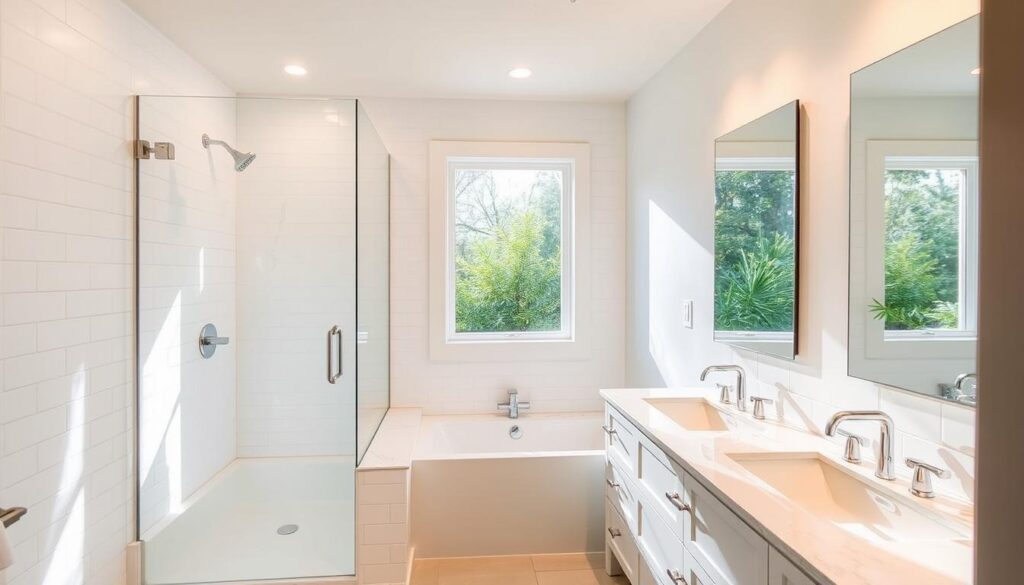
Popular Tub-to-Shower Conversion Styles
The decision to convert a bathtub to a shower opens up a world of design possibilities, from modern walk-in showers to elegant glass enclosures. Homeowners can choose from a variety of styles to transform their bathroom into a relaxing oasis or a sleek, modern space.
Walk-In Shower Designs
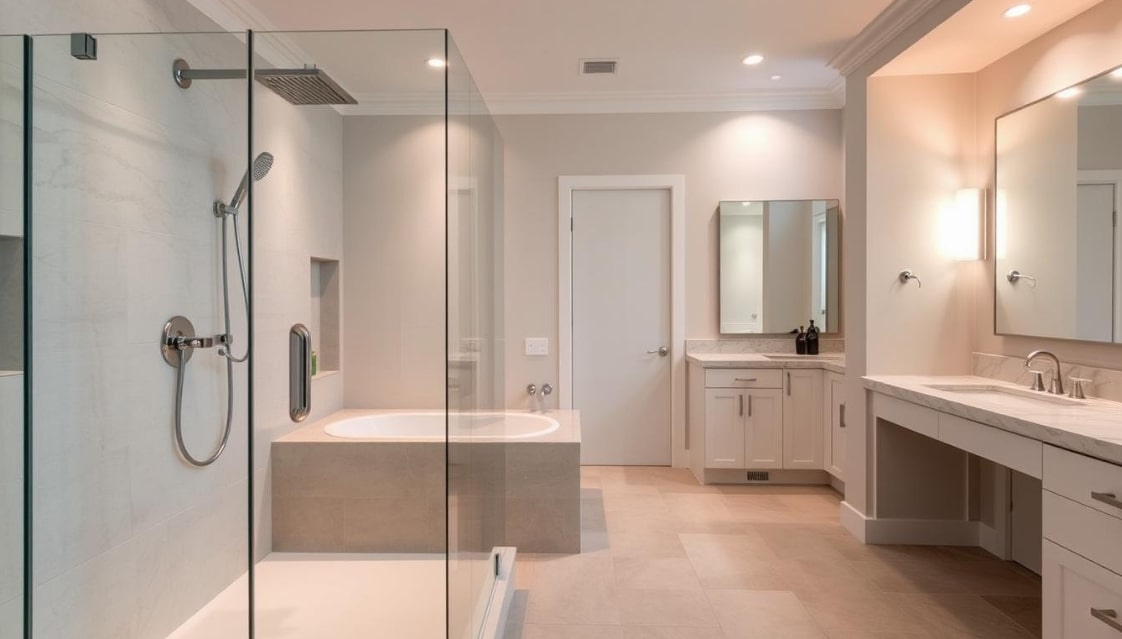
Walk-in showers are a popular choice for tub-to-shower conversions due to their accessibility and modern appeal. They can be customized with tile shower designs, bench seating, and multiple shower heads to create a spa-like experience.
Curbless Shower Options
Curbless showers offer a seamless transition into the shower area, making them ideal for homeowners seeking a sleek, barrier-free design. This style is also beneficial for those with mobility issues, as it provides easy access.
Glass Enclosure Ideas
Glass enclosures can enhance the visual appeal of a shower by creating a sense of openness. Options range from framed glass doors to frameless glass shower doors, allowing homeowners to choose the level of transparency and style that suits their bathroom.
| Shower Style | Key Features | Aesthetic Appeal |
| Walk-In Shower | Tile designs, bench seating, multiple shower heads | Modern, spa-like |
| Curbless Shower | Barrier-free, seamless transition | Sleek, accessible |
| Glass Enclosure | Framed or frameless glass doors | Elegant, open |
For expert guidance on selecting the perfect tub-to-shower conversion style for your bathroom, consider consulting with professionals. You can reach out to us at (858) 429-9207 or email us at GC@realvestmentremodeling.com for more information on our services at Realvestment Remodeling
Planning Your Tub-to-Shower Conversion Project
Planning is key to a successful tub-to-shower conversion, involving budget, timeline, and design considerations. A well-planned bathroom remodel can significantly enhance the overall aesthetic and functionality of your space.
Assessing Your Current Bathroom Layout
Before diving into your tub-to-shower conversion, it’s crucial to assess your current bathroom layout. Consider the existing plumbing, electrical fixtures, and overall space configuration. This assessment will help identify potential challenges and opportunities for improvement.
Setting a Realistic Budget
Setting a realistic budget is vital to avoid cost overruns. Factor in the conversion cost, including materials, labor, and any necessary permits. For professional assistance, consider consulting with experts like those at Realvestment Remodeling, reachable at (858) 429-9207 or Californiarealvestment@yahoo.com, who can be found at https://realvestmentremodeling.com/.
Timeline Expectations
Understanding the timeline for your tub-to-shower conversion is essential for planning. The duration of the project can vary based on the complexity of the conversion and the availability of materials and labor. Generally, a straightforward conversion can take a few days to a couple of weeks.
By carefully assessing your bathroom layout, setting a realistic budget, and understanding the timeline expectations, you can ensure a smooth and successful tub-to-shower conversion project.
Materials and Fixtures for Your New Shower
When converting your bathtub to a shower, selecting the right materials and fixtures is crucial for both functionality and aesthetics. The choices you make will significantly impact the overall look and feel of your new shower.
Shower Base and Pan Options
The shower base and pan are fundamental components of your shower conversion. You can choose from a variety of materials, including acrylic, tile, and stone. Each material has its benefits, such as durability and ease of maintenance.
- Acrylic shower bases are cost-effective and easy to install.
- Tile shower pans offer customization and a traditional look.
- Stone shower bases provide a luxurious and durable option.
Wall Surround Materials
The wall surrounds in your shower not only enhance its appearance but also protect the walls from water damage. Common materials used for wall surrounds include tile and prefabricated shower surrounds.
Tile Options and Designs
Tile is a popular choice for shower surrounds due to its versatility and durability. You can choose from various tile designs, such as mosaic, subway, and large format tiles.
Prefabricated Shower Surrounds
Prefabricated shower surrounds are another option, offering a quick and easy installation process. They come in various styles and materials, including acrylic and fiberglass.
Shower Fixtures and Hardware
Shower fixtures and hardware play a crucial role in the functionality and style of your shower. This includes showerheads, handles, and doors and enclosures.
Showerheads and Systems
Modern showerheads come in a variety of styles, from rainfall showerheads to handheld models. You can also consider installing a thermostatic mixing valve for enhanced temperature control.
Doors and Enclosures
The doors and enclosures for your shower can be made from glass, framed, or frameless designs. The choice depends on your desired aesthetic and budget.
The Tub-to-Shower Conversion Process
A successful tub-to-shower conversion hinges on understanding the various stages involved in the process. This complex renovation requires careful planning, precise execution, and a clear understanding of what to expect.
Demolition and Removal
The first step in the tub-to-shower conversion process is the demolition and removal of the existing bathtub. This involves disconnecting plumbing fixtures, removing the tub, and disposing of the debris. It’s essential to take necessary safety precautions during this phase, such as wearing protective gear and ensuring the area is well-ventilated.
Plumbing Considerations
Once the old tub is removed, the next step is to assess and modify the plumbing system as needed. This may involve relocating showerheads, handles, and other fixtures to accommodate the new shower design. Ensuring that the plumbing is properly configured is crucial for the functionality and safety of the shower.
Installation Steps
The installation phase involves several key steps, including:
- Preparing the shower area by ensuring it is level and waterproof.
- Installing the shower base or pan.
- Setting up wall surrounds and ensuring they are properly sealed.
- Installing shower fixtures, such as the showerhead and handles.
- Completing any finishing touches, such as tiling and grouting.
Professional vs. DIY Approaches
Homeowners have the option to undertake the tub-to-shower conversion themselves or hire professionals. While DIY projects can be cost-effective, they require significant time, skill, and knowledge. Hiring professionals, on the other hand, ensures the job is done correctly and efficiently, but at a higher upfront cost. It’s essential to weigh the pros and cons based on your specific situation and skills.
For expert guidance and professional tub-to-shower conversion services, you can contact Realvestment Remodeling at (858) 429-9207 or Californiarealvestment@yahoo.com. Visit their website at https://realvestmentremodeling.com/ for more information.
Cost Factors for Bathtub to Shower Conversions
When considering a tub-to-shower conversion, it’s essential to examine the various cost factors involved. The total cost of the conversion can be influenced by several elements, including materials, labor, and the complexity of the project.
Average Price Ranges
The average cost for a bathtub to shower conversion can range from $3,000 to $15,000 or more, depending on the scope of the project. High-end conversions with premium materials and advanced features can exceed $20,000.
| Conversion Type | Average Cost |
| Basic Conversion | $3,000 – $6,000 |
| Mid-Range Conversion | $6,000 – $10,000 |
| High-End Conversion | $10,000 – $20,000+ |
Ways to Save on Your Conversion
To save on your tub-to-shower conversion, consider cost-effective materials and efficient labor practices. Simplifying the design and using prefabricated shower units can also help reduce costs.
- Choose materials that are durable yet affordable.
- Opt for a simpler design to minimize labor costs.
- Consider DIY elements if you have the necessary skills.
Return on Investment Considerations
A bathtub to shower conversion can significantly impact your home’s value. According to real estate experts, a well-designed shower conversion can recoup a substantial portion of its cost at resale. For more information on how to maximize your return on investment, you can contact a professional at (858) 429-9207 or email Californiarealvestment@yahoo.com.
Financing Options
For homeowners who need financial assistance, there are various financing options available. Home equity loans and personal loans are common choices for funding bathroom renovations. Visit Realvestment Remodeling for more information on financing and conversion services.
Transform Your Bathroom with Professional Conversion Services
A tub-to-shower conversion can significantly enhance your bathroom’s functionality and aesthetic appeal. By choosing professional conversion services, you can ensure a seamless and stress-free renovation experience.
Realvestment Remodeling specializes in bathroom transformation, offering expert tub to shower conversion solutions. Their team of professionals will guide you through every step of the remodel, from initial consultation to final installation.
To schedule a consultation or learn more about their renovation services, contact Realvestment Remodeling at (858) 429-9207 or email them at
GC@realvestmentremodeling.com You can also visit their website at Realvestment Remodeling to explore their portfolio and services.
By entrusting your tub-to-shower conversion project to professionals, you can enjoy a beautifully renovated bathroom that meets your needs and enhances your home’s value.
FAQ
What is the average cost of a tub-to-shower conversion?
The average cost can range from $3,000 to $15,000 or more, depending on the complexity of the project, materials chosen, and labor costs.
How long does a tub-to-shower conversion take?
The duration of the project can vary, but typically, it takes anywhere from a few days to a few weeks to complete, depending on the scope of the work and the availability of materials.
Can I convert my bathtub to a shower myself?
While it’s possible to attempt a DIY conversion, it’s generally recommended to hire a professional due to the complexity of plumbing and potential for water damage if not done correctly.
What are the benefits of a curbless shower?
A curbless shower provides improved accessibility, especially for individuals with mobility issues, and can also create a sleek, modern look in the bathroom.
How do I choose the right shower fixtures for my new shower?
Consider factors such as water pressure, personal preference, and the style of your bathroom when selecting shower fixtures, including showerheads and handles.
Will a tub-to-shower conversion increase my home’s value?
Yes, a well-designed and professionally executed tub-to-shower conversion can increase your home’s value by improving the functionality and aesthetic appeal of the bathroom.
What kind of maintenance is required for a new shower?
Yes, a well-designed and professionally executed tub-to-shower conversion can increase your home’s value by improving the functionality and aesthetic appeal of the bathroom.
Can I replace my tub with a walk-in shower in a small bathroom?
Yes, converting to a walk-in shower can be a great option for small bathrooms, as it can make the space feel larger and more accessible.
How do I ensure my new shower is waterproof?
Proper waterproofing measures, such as applying a waterproof membrane to the shower area, are crucial to prevent water damage and leaks.
What are the most popular materials for shower walls?
Popular materials for shower walls include tile, glass, and acrylic, each offering different benefits in terms of durability, maintenance, and aesthetic appeal.